
by Kathleen Freiderich
Popularity + Benefits of a Sauna
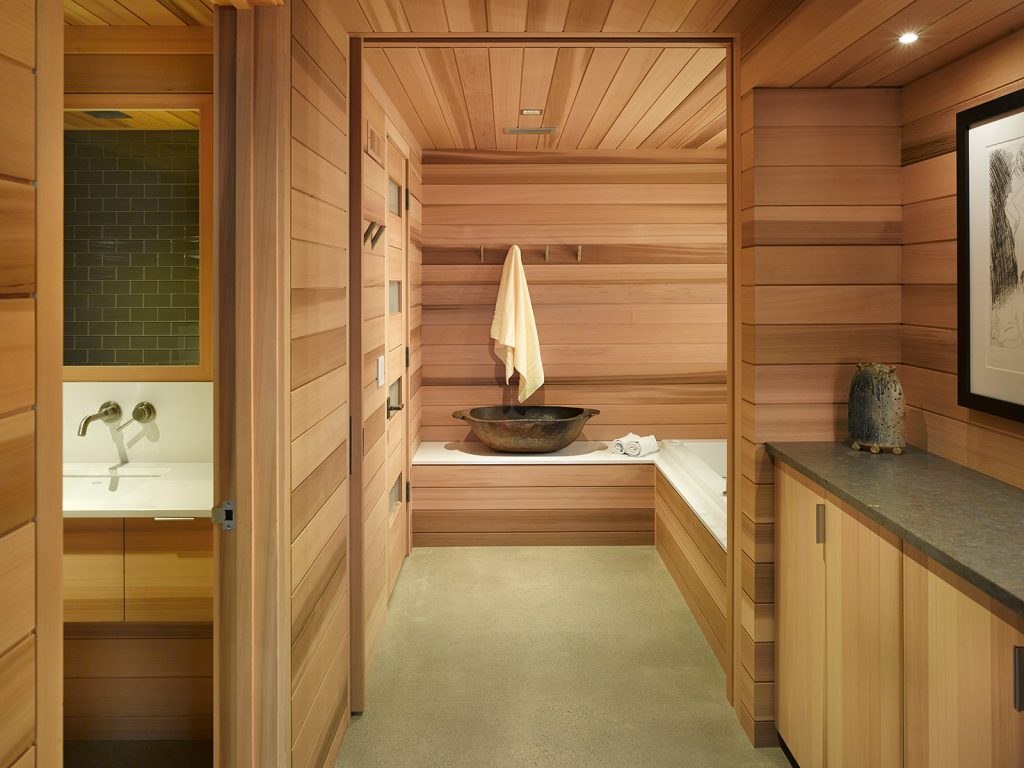 Saunas are becoming an increasingly integral part of many people’s wellness routines, and thus a feature of residential design, particularly in northern climates. Benefits range from improved circulation, detoxification, stress reduction, improved sleep, and lower blood pressure. Some choose to include a cold-plunge pool, overhead shower, dip in the swimming pool, or dip in an adjacent lake. These benefits, in addition to the delightful thermal and social experience, make an excellent case for considering a home sauna as part of residential design. The convenience of taking a sauna at home, privacy afforded by an in-home construction and the health benefits of heat therapy make them an attractive option as part of residential design.
Types of Sauna Design
Original Finnish saunas were created from a pit dug into the ground with a pile of stones at the bottom and a campfire as the heat source. Modern sauna types today include wood-burning, electric, and infrared. Some homeowners elect to build standalone sauna buildings, often adjacent to a pool or a lake, or include a sauna as part of a remodel project.
In-Home Saunas
With a relatively modest footprint of 5’ x 7’, saunas can typically be added to an existing footprint of a home, often in the lower level. Companies such as Finnleo provide sauna “kits” that include the wood, door, heat source, and light to be added to a constructed space.
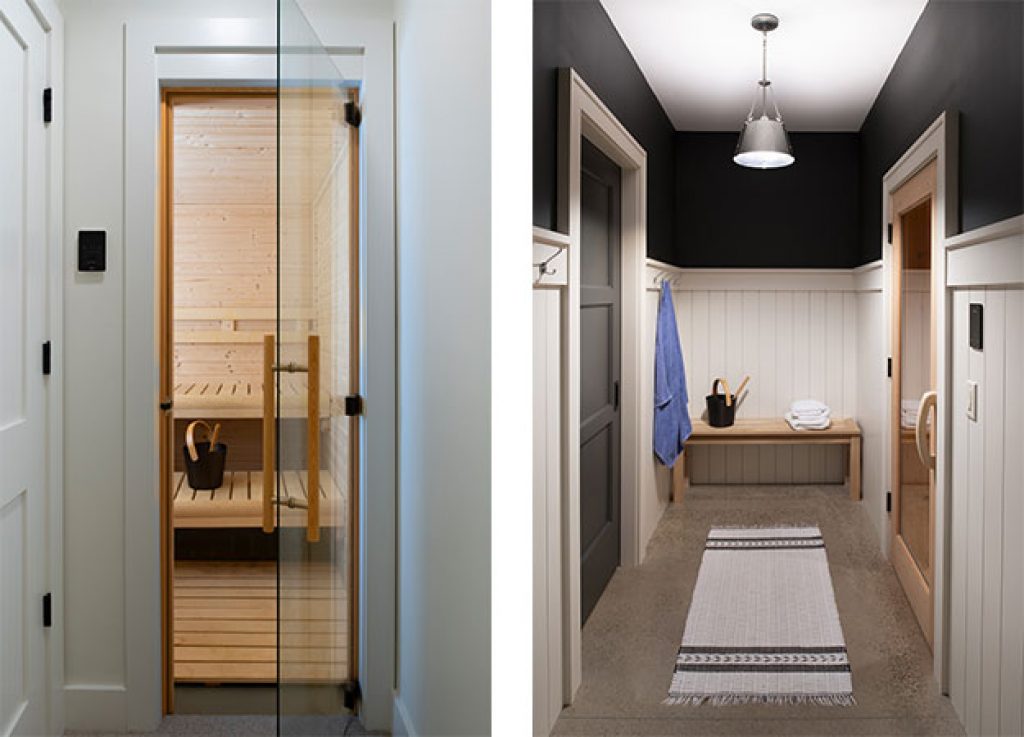
Two examples of a lower-level saunas — in a whole home remodel (Urban Reset) left, and a new home (The Farm) right.
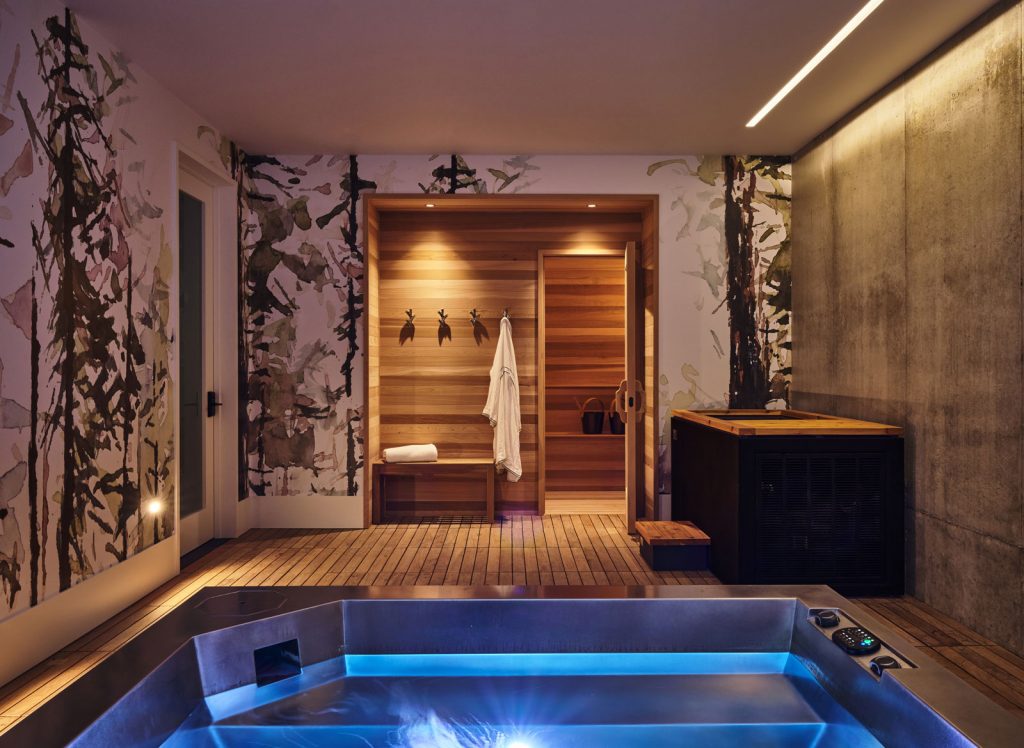
The Light Frame project, a new build, included a sauna as part of a whole wellness wing of the lower level including an exercise room, hot tub, and cold plunge tub.
Standalone Saunas
Standalone sauna buildings allow for the greater social experience of taking a sauna with friends and family. They are often considered public social spaces in Nordic and other cultures, and as those ideas spread to the United States, custom residential design is increasingly seeing sauna usage as part of the social aspect of a home.
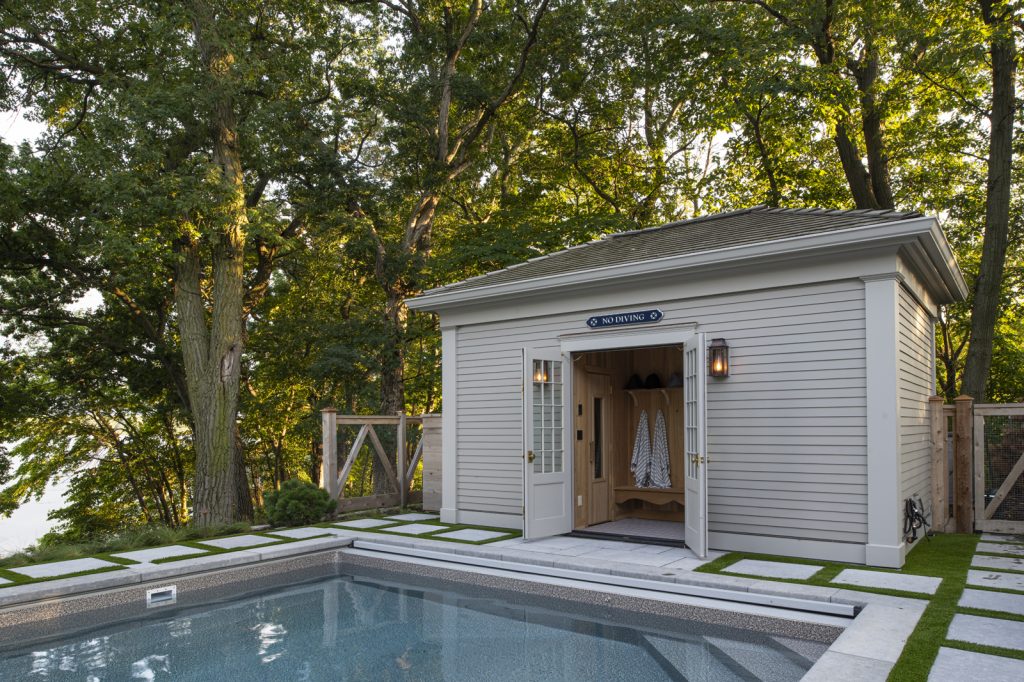
This free-standing pool building (Classic Couture) includes an entry vestibule, pool pump storage and a 5’ x 7’ sauna. Proximity to the pool is essential for a post-sauna plunge!
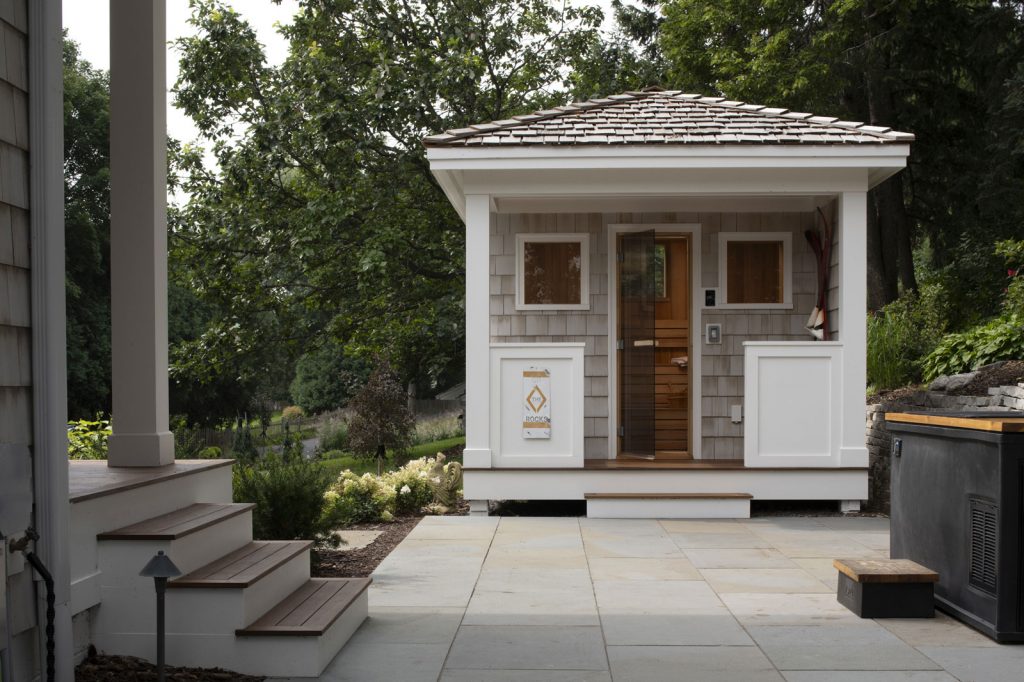
A larger 6’ x 10’ sauna fits inside this appointed sauna building adjacent to the main house (Lakeside Connection), with a plunge pool and hot tub on the patio nearby.

Rehkamp Larson designed a new double sauna for YMCA Camp Widjiwagan as a pro bono project — two saunas allow use by more campers!
Outbuildings
Sometimes it takes some creativity to find a cozy corner for a sauna! Consider adding one to a new or existing outbuilding. See below for examples of a sauna tucked into the corner of a lakehouse garage and added to the the back of a lakeside bunkhouse.
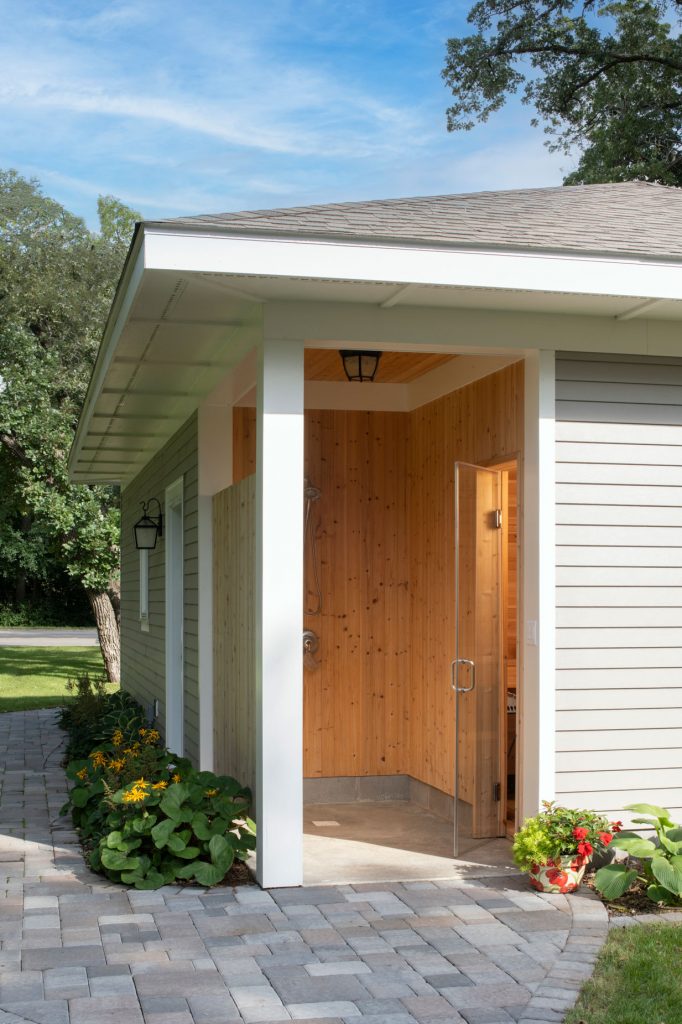
A sauna and outdoor shower in the back corner of a detached garage at Green Lake Cottage.
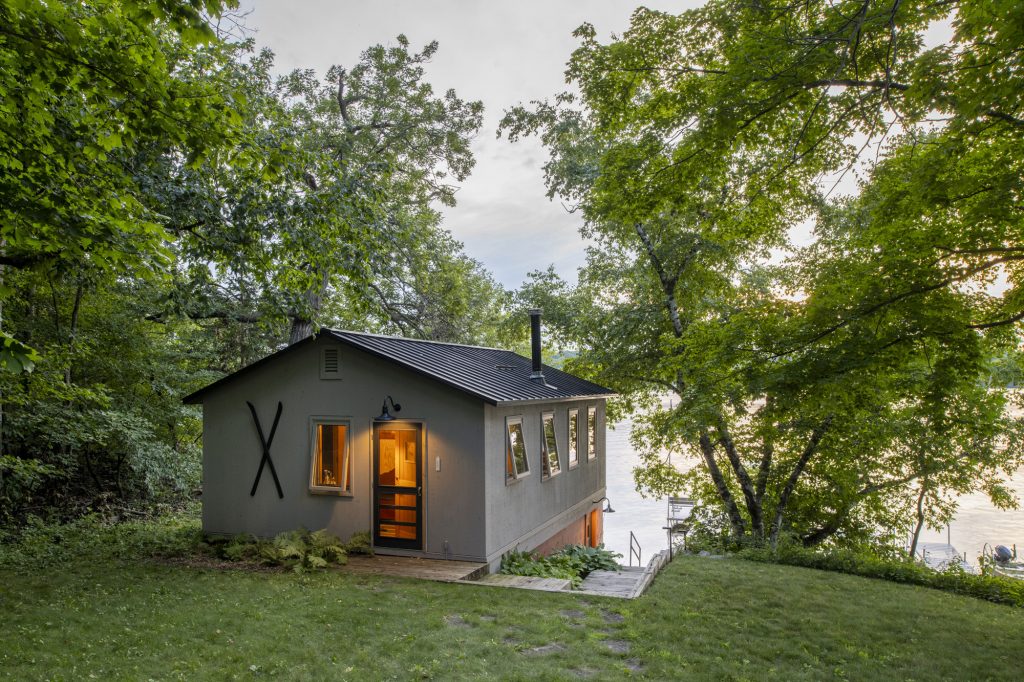
This bunkhouse remodel (Lake Legacy) includes a sauna in a former storage area — see top photo for a peek inside!
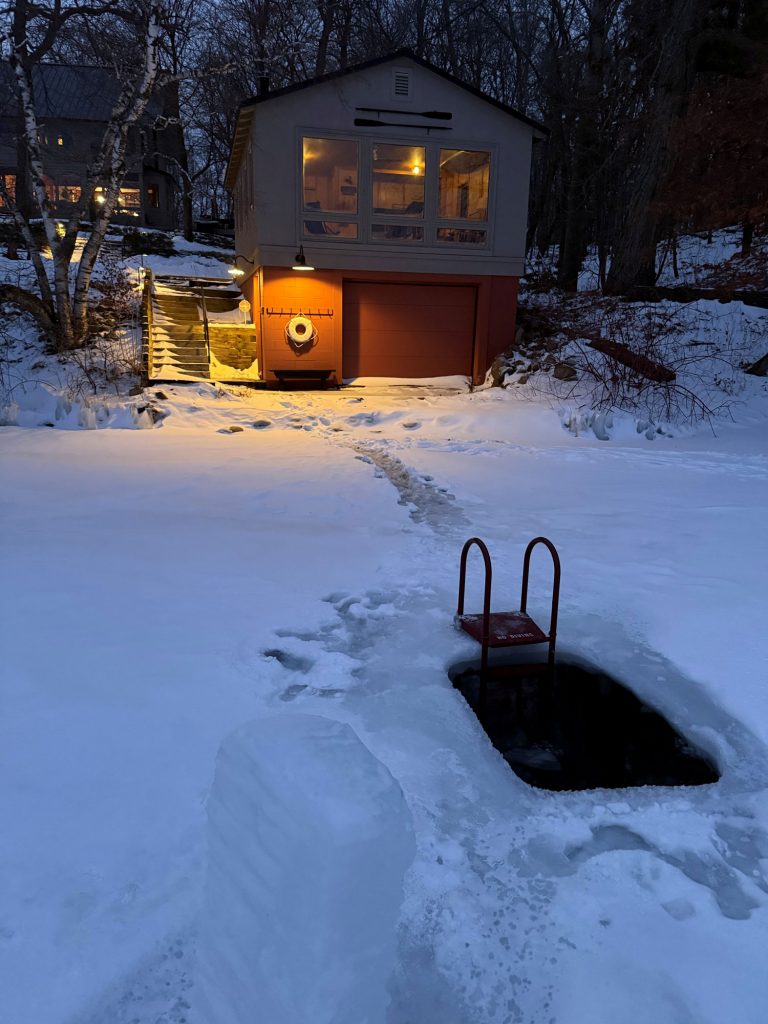
Cold plunge!!